AIMS:
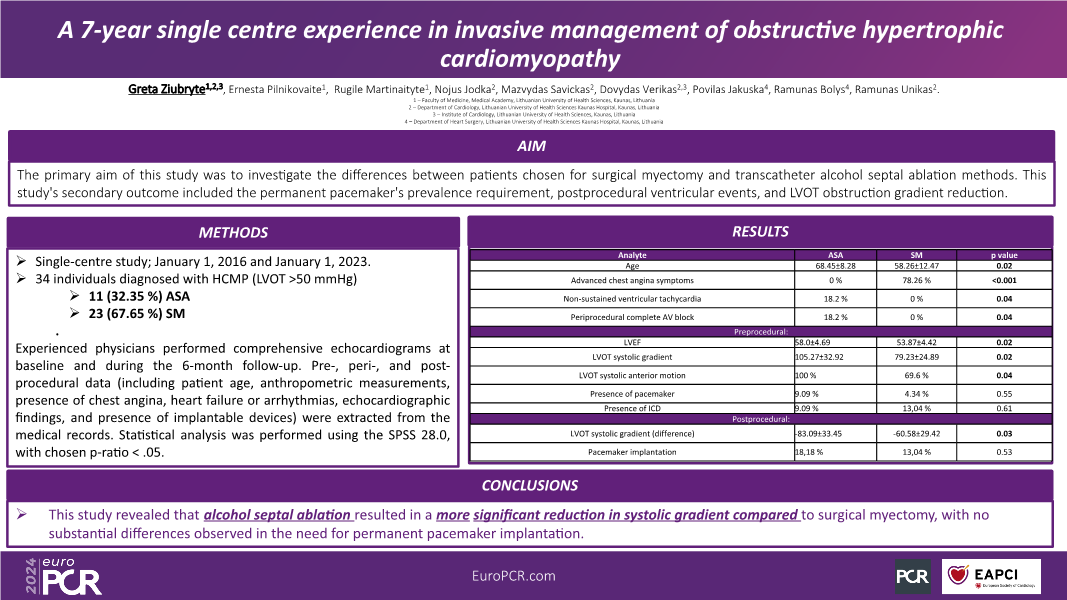
The primary aim of this study was to investigate the differences between patients chosen for surgical myectomy and transcatheter alcohol septal ablation methods. This study's secondary outcome included the permanent pacemaker's prevalence requirement, postprocedural ventricular events, and LVOT obstruction gradient reduction.
METHODS AND RESULTS:
In total, 34 patients diagnosed with HCMP with severe LVOT obstruction (>50 mmHg) and treated in our hospital between the 1st of January in 2016 and the 1st of January in 2023 have been included in our single-centre study. Of all, 11 (32.35%) were alcohol septal ablation (ASA), and the rest, 23 (67.65%), were surgical septal myectomy (SM). For all patients, baseline and six-month follow-up echocardiograms were performed by experienced physicians. Clinical data were collected from medical records. For statistical analysis, the SPSS 28.0 statistical software package was used with the chosen significance level of p < 0.05. The preprocedural data analysis revealed that the SM group had a statistically significant age difference of almost ten years compared to the ASA group (p = .02). Furthermore, the ASA group exhibited a more significant preprocedural left ventricle ejection fraction, left ventricular outflow tract (LVOT) systolic gradient, and a higher occurrence of systolic anterior motion (SAM) compared to the SM group (p = .02, p = .02, and p = .04, respectively). Additionally, advanced angina symptoms were more frequently observed in the SM group (p<.001), while non-sustained ventricular tachycardia and periprocedural complete atrioventricular block were more frequently diagnosed in the ASA group (p = .04). No other significant differences were observed between the two groups (as presented in Table 1). Regarding procedural outcomes, the analysis revealed a statistically significant reduction in LVOT systolic gradient in the ASA group compared to the SM group (p = .03). The frequencies of pacemaker implantation after the procedure did not differ significantly between the two groups (p = .53).
CONCLUSION:
Despite both alcohol septal ablation and surgical myectomy being considered safe options for managing hypertrophic cardiomyopathy with left ventricular outflow tract obstruction in highly experienced centers, this study revealed that alcohol septal ablation resulted in a more significant reduction in systolic gradient compared to surgical myectomy, with no substantial differences observed in the need for permanent pacemaker implantation.